In California, the standard statute of limitations for a brain injury lawsuit is typically two years from the date of the incident.
However, for victims of traumatic brain injury, this window is often a legal mirage. Depending on how the injury occurred, who caused it, and when symptoms appeared, an entirely different deadline may apply.
Brain injuries are not like broken bones, and symptoms can take days or weeks to manifest. By the time you connect cognitive fog, memory disruption, or personality changes to the accident, a significant portion of your filing window may already be gone.
If you or someone you love suffered a brain injury, speaking with a California brain injury lawyer can help you understand exactly where your deadline stands before it is too late to act.
The two-year rule under CCP 335.1 applies to the vast majority of personal injury claims in California filed against private individuals or entities. The clock starts on the date of the accident, and “filing” means a lawsuit submitted to the California Superior Court, not an insurance claim or a demand letter.
Four specific scenarios carry deadlines that override this standard entirely, and missing the correct one ends the case permanently.
Under the California Government Claims Act (Gov Code 911.2), claims against government entities for personal injuries like brain injuries often require a formal administrative claim to be filed within six months of the injury. This is not the lawsuit itself. It is a mandatory prerequisite to filing one, and skipping it typically bars the case entirely.
This six-month rule applies when the TBI was caused by:
If a government agency was involved in your accident, contact California Trial Law Group immediately. Six months go faster than most people expect.

For injured victims under 18, the two-year clock is “tolled” or paused until their 18th birthday, giving them until their 20th birthday to file under CCP Section 352.
There is one critical exception that most families do not know: when a government entity is involved, the six-month government claims clock is not paused by minority status. A parent or guardian must present the government claim within six months on the minor's behalf, regardless of the child's age.
For victims whose TBI renders them legally incapacitated, the statute may be tolled until capacity is restored. This applies only in severe cases where the victim cannot manage their own legal affairs, not broadly to anyone experiencing TBI symptoms. These situations often involve catastrophic injuries that permanently affect cognitive function and daily life.
When a brain injury leads to death, the wrongful death filing window is two years from the date of death, not the date of the accident, under CCP Section 335.1.
For instance, if a victim was injured in January and died from those injuries in August, the two-year window opens in August, not January. Families who calculate from the accident date can unknowingly run out of time.
One additional rule applies when a minor is filing a wrongful death claim for the death of a parent. That minor has two years from their 18th birthday to file, not from the date of death.
A California wrongful death attorney can identify the exact start date that controls your family's deadline before the window closes.
When a healthcare provider's negligence or medical error causes a brain injury, CCP Section 340.5 governs the deadline. The filing window is three years from the date of injury or one year from the date of discovery, whichever comes first.
Common examples include:
Before filing, a written notice of intent to sue for medical malpractice must be served on the healthcare provider at least 90 days in advance. Serving that notice within the final 90 days of the limitations period extends the filing deadline by 90 days.
This extension mechanism is procedurally complex and should not be used as a deadline backstop. Contact a California medical malpractice attorney well before the one-year discovery deadline.
Yes, but this exception is narrower than most people assume.
Under California's delayed discovery rule, the clock shifts to the date you discovered, or reasonably should have discovered, the injury and its cause. Because types of traumatic brain injury vary widely, symptoms like cognitive fog, memory disruption, and mood changes can surface days or weeks after an accident. Courts recognize that earlier discovery is not always reasonable in those circumstances.
However, delayed symptom onset alone does not trigger the rule, and neither does simply delaying medical care. Qualifying requires a fact-specific legal analysis tied to the exact circumstances of your case.

No. Negotiating with an insurance company does not pause, extend, or reset the statute of limitations under any circumstance.
Insurance carriers know the two-year deadline exists. Some adjusters intentionally slow-walk settlement discussions as it approaches, hoping you’ll overlook the hidden costs of your injury until it is too late to file.
When the statute expires during negotiations, the claim is permanently extinguished, and the court has no discretion to revive it. Filing a lawsuit before the deadline preserves your legal right to keep negotiating.
In most brain injury cases, missing the filing deadline means permanently losing the right to sue.
California courts have no discretion to extend an expired statute of limitations. Once the deadline passes, the defendant can raise it as an absolute defense, and the case will be dismissed regardless of how strong the underlying claim is.
That said, a small number of narrow exceptions may apply:
In California brain injury cases, the statute of limitations is not a formality. It is the hard boundary that determines whether a claim can be filed at all. Once the deadline passes, the case is permanently closed, regardless of the severity of the injury or the strength of the evidence.
Brain injuries arise from many circumstances: a car accident, a truck collision, a motorcycle crash, or a slip-and-fall accident that begins with a head trauma that results in a lasting impact. Each comes with its own deadline rules and evidence requirements.
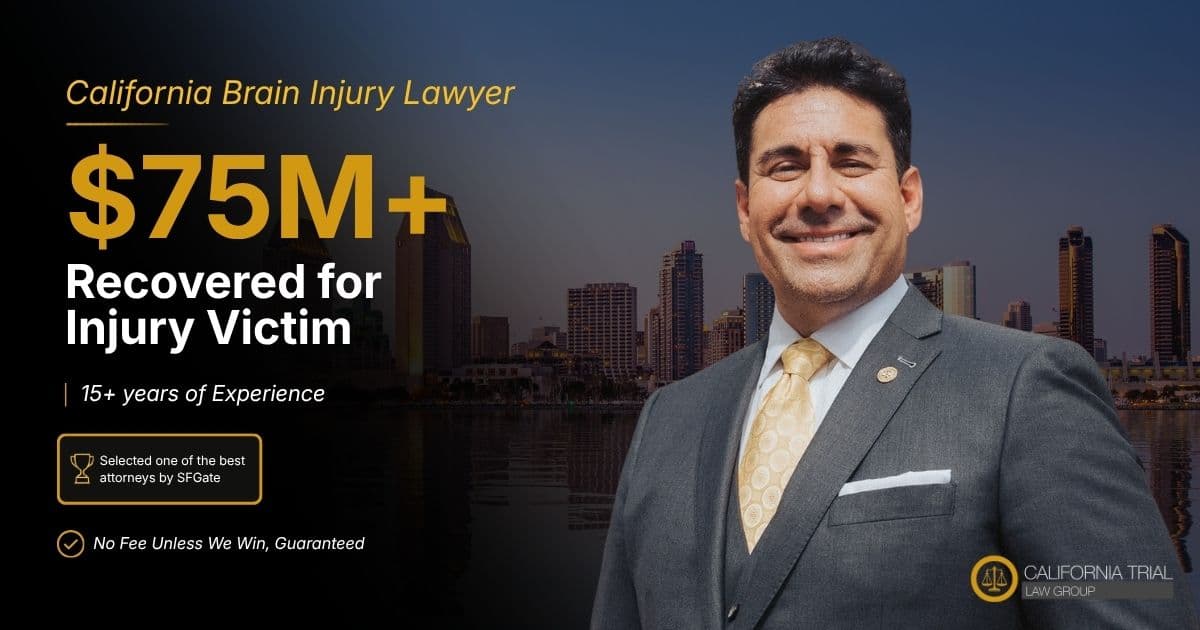
Attorney Ike M. Kaludi of California Trial Law Group has recovered $29,700,000 in a single catastrophic brain injury case. The firm's record across more than a decade of representing California injury victims speaks for itself:
If you are unsure how much time you have left, do not wait to find out the hard way. Call (888) 238-7562 or schedule a free consultation. No upfront cost. No fee unless we win. Available 24/7 with statewide representation across California.